

Shipped, Live, And
Open Right Now.
We would rather show you working software than a slideshow. Below are the projects Zippl Labs has designed, built and deployed: the storefront and catalogue for a hardware shop that has traded since 1993, and our own offline-first billing app. Open either one and judge it yourself.
Agarwal Hardware & Tools Store
Tools, fittings & building material · Jaipur, since 1993
554 products · English / हिंदी
Agarwal Hardware & Tools Store
A counter business since 1993, with thousands of tools on the shelves and nothing online. We built the storefront, the catalogue behind it, and the panel the staff use to run both.
A Shop Counter, Put Online Properly
Customers can now search 554 tools by department or brand, read the specifications, and send the shop a list of what they want, in English or Hindi, on whatever phone they happen to be holding.
-
Bilingual, field by field: every page carries an EN / हिं toggle. Products have their own Hindi name and description, and fall back to English where a translation is missing, so a half-translated catalogue still reads correctly.
-
An enquiry list, not a checkout: a hardware shop quotes trade rates, so customers collect items into a list and send it to the shop or open it as a pre-written WhatsApp message. The server re-prices every line from the database, so the shop’s real price is what gets recorded.
-
The staff run it, not us: an admin panel to add, edit, hide or delete items, set price, MRP and stock, upload a photo, and work each enquiry through new → contacted → closed.
-
The catalogue stocks itself: the Taparia, PYE, Venus and Yuri ranges are read from the manufacturers’ own sites and loaded by SKU. Re-running refreshes what the brand publishes (name, photo, description) and never overwrites what the shop sets, such as price, stock or which items are featured.
-
Quick on mobile data: the pages are static files served from the edge, and product photos are fetched straight from where they live, so a page of two dozen products stays around 25 KB instead of several megabytes.
-
Closed by default: the browser never talks to the database. It only calls the site’s own API, row-level security is on, and the key that can read the tables exists only on the server.
Zippl Billing & Khata App
The project we answer to ourselves for. Same team, same stack, same standards we bring to a client build, running a shop’s entire counter.
Software That Keeps Working When The Internet Does Not
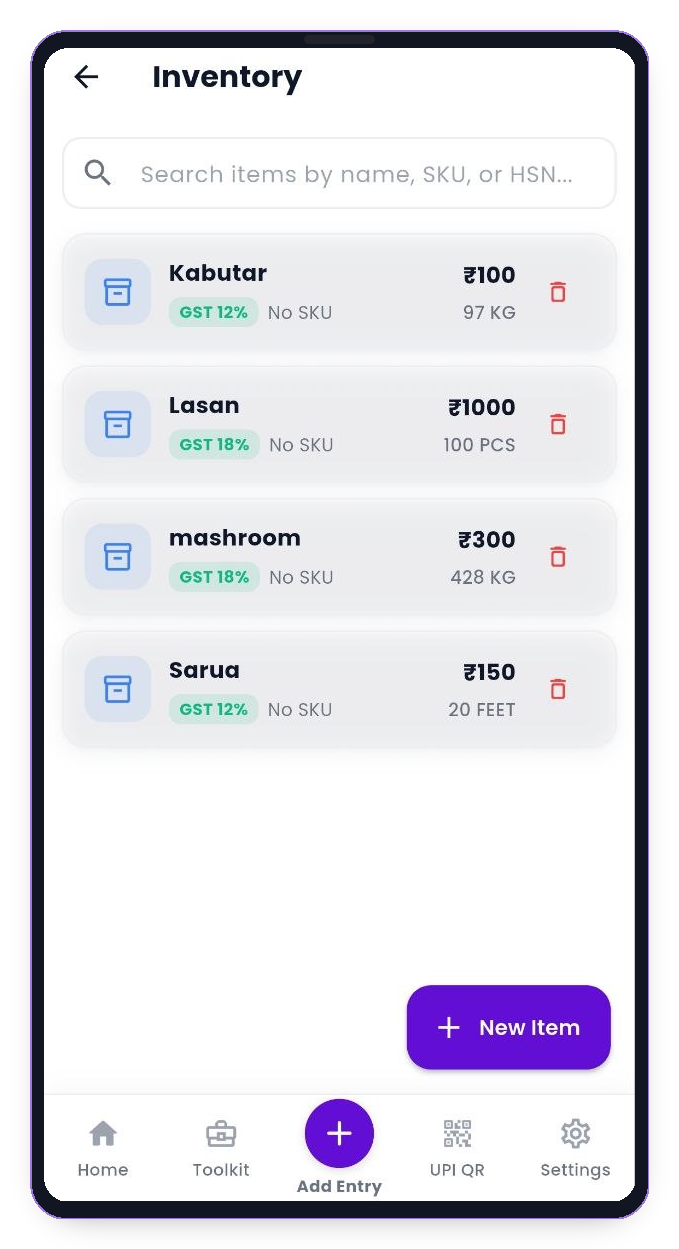
Zippl handles GST invoicing, stock, customer udhar, thermal receipts and profit reports for Indian retailers, with the connection switched off, which is how a lot of Indian shops actually operate.
-
Three platforms, one codebase: Android, Windows desktop and the browser, all built from the same Flutter source.
-
Genuinely offline-first: a local database on the device is the source of truth, so every screen is instant; the cloud catches up in the background when the network returns.
-
Real counter hardware: 58 mm and 80 mm Bluetooth or USB thermal printers, barcode scanners, and dynamic UPI QR codes for collection.
-
Six languages: English, Hindi, Hinglish, Marathi, Kannada and Tamil, because the person at the counter is not always the owner.
-
Multi-shop and role-aware: each shop’s data is isolated at the database level with row-level security, and staff roles decide who can see or change what.
The Same Three Promises On Both
Whether it is a client site or our own product, the rules we build by do not change.
You Own It, Not Us
The code, the database and the hosting account are yours, in your name, with the deployment written down step by step. Nothing is held hostage.
- Full source handover
- Written deployment runbook
- No proprietary builder lock-in
Tests Where It Actually Matters
The failures that cost money are the silent ones: a search that quietly returns nothing, a page that renders broken markup. Those paths are covered by tests that run before anything ships.
- Automated checks on every push
- Only a passing build deploys
- Rollback is one command
Built To Be Handed Over
Plain, readable code with a README that explains where everything lives, so the next developer (ours or yours) can pick it up without a phone call.
- One file for your shop details
- Wording kept out of the code
- Light and dark themes included